Bearing witness to 8.9 million individual animals killed in Chile
Among fish farmed in aquaculture operations around the world, a key species in Atlantic salmon (Salmo salar).
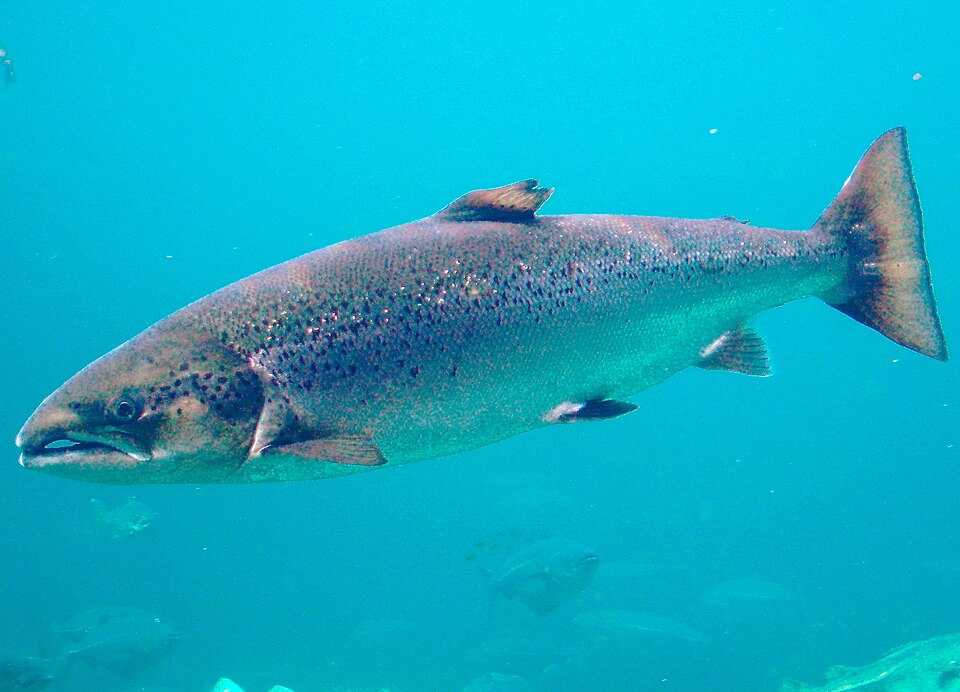
Like all fish, Atlantic salmon are beautiful to watch and elegantly adapted to their environment. In the case of Atlantic salmon, one gets the impression of a marine tiger or wolf, which in ecological terms (salmon being predatory fish) is not an inappropriate analogy.
Salmon are farmed for their meat in a process that involves hatching eggs, a juvenile stage in freshwater, and an adult stage in circular cages in the ocean. The bulk of the world’s farmed Atlantic salmon production come from six countries: Norway, Chile, the UK, the Faroe Islands, Canada, and Australia (Fishcount).
Chile collects a range of data on salmon production, including mortality figures in sea cages and official farm inspection records. I recently submitted a freedom-of-information request with the Chilean government to obtain some of this data.
Most notably, the data records the number of Atlantic salmon who died on Chilean farms, with each row of data matched to a particular farm and a particular week of the year. My data covers the years 2022 to 2024.
Between 2023 and 2025, there were 8,970,205 individual Atlantic salmon who died on sea farms in Chile. This pales in comparison to the ~450 million individual salmon who survived until harvest and slaughter during this period Fishcount. Moreover, this data excludes fish who died during the hatching and freshwater stages of production.
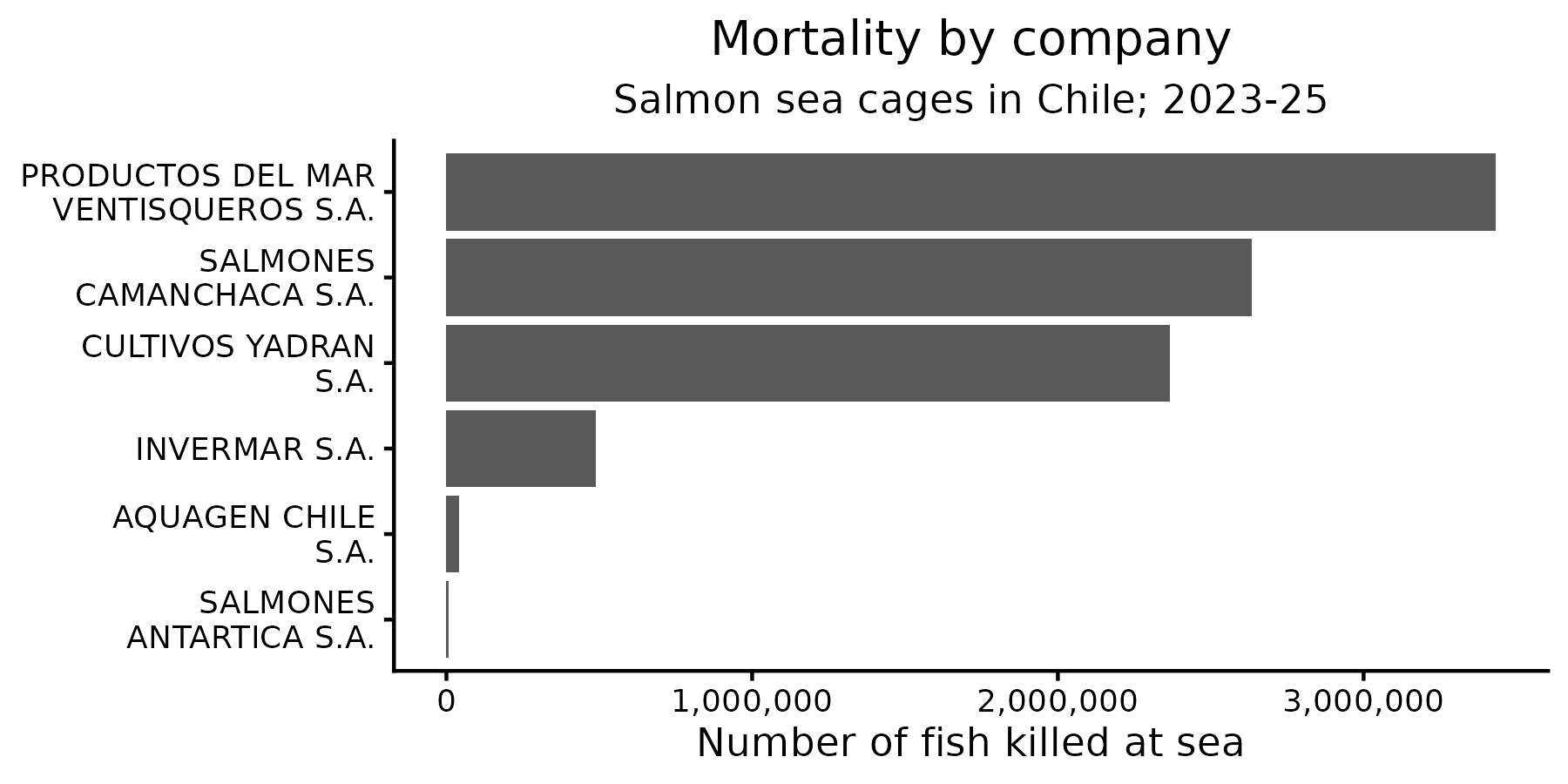
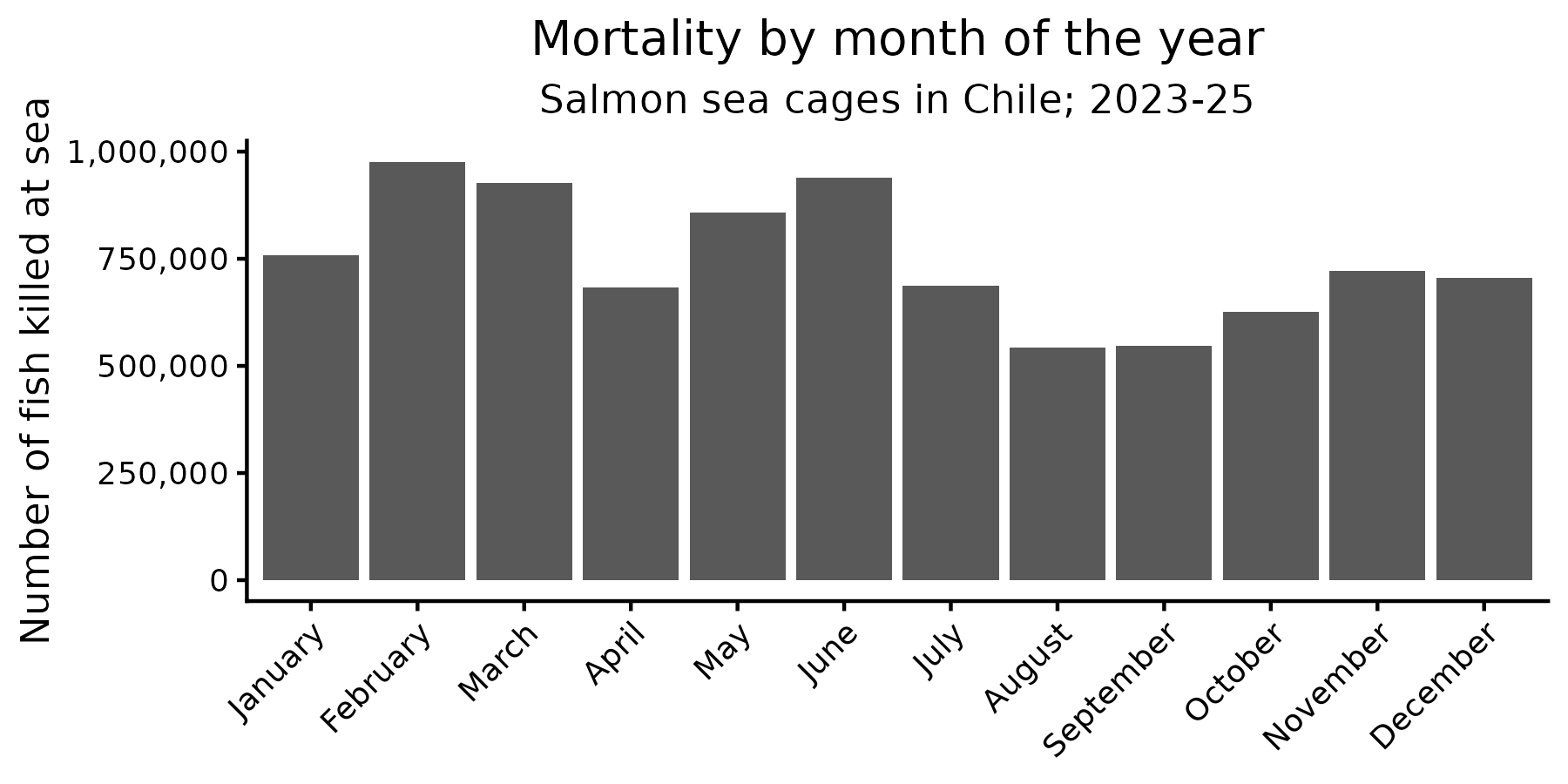
But I think it’s important to recognise that these are individuals who are brought into existence and then eventually killed by humanity’s modern, industrial economic systems of food production.
All of those 8,970,205 individuals — while they spent their lives confined to a freshwater aquaculture tank, and then to a round cage suspended in the ocean — had feelings and preferences and personalities and a lived experience, a history. Then, through disease or starvation or exposure to the elements, they were killed, so that humans can eventually harvest and eat their siblings. Because they died before harvest and slaughter, their existences aren’t even recorded in published statistics of meat production. I’m sad that I can never meet them — I wish I could have.
Further reading about salmon productions and the implications for animal lives: